Basmati vs Regular Rice: Which Is Better for Daily Dal Bhat?
On this page
Basmati or regular rice for daily dal bhat? We compare taste, texture, price and cooking, and explain when each one makes sense for a Nepali kitchen.
Ask ten Nepali households which rice they buy and you will get at least six different answers, usually given with total confidence. Rice is personal. Still, there are real differences between the main kinds, and knowing them helps you pick the right sack instead of the one you have always bought.
The main types of rice in Nepali kitchens
Basmati
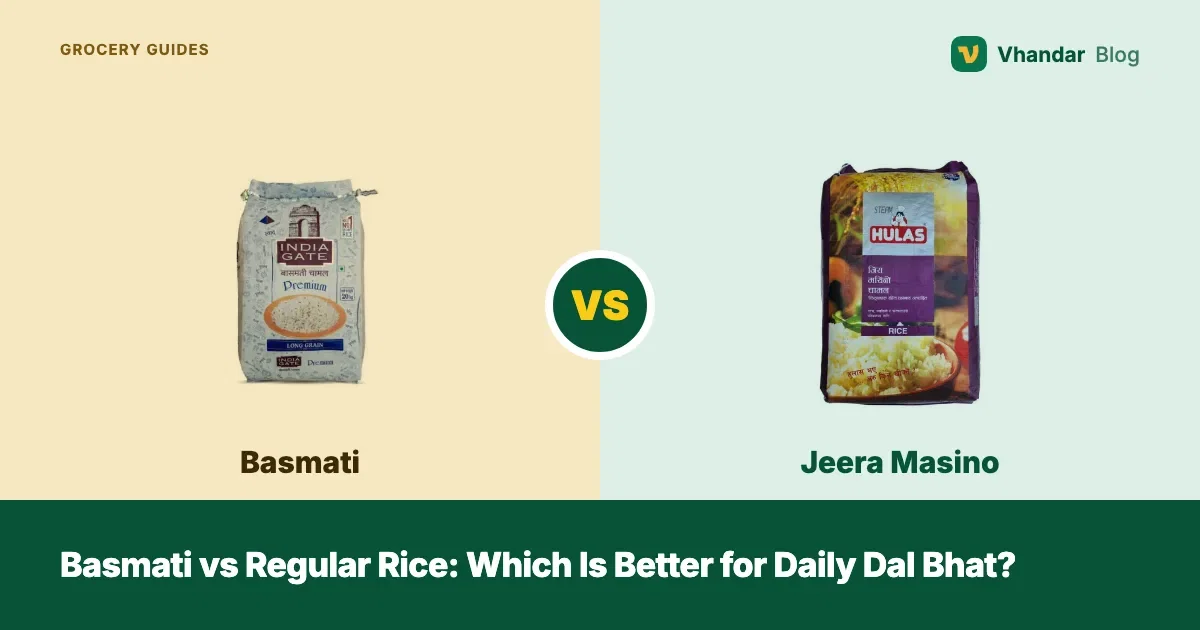
Long, thin grains that stretch further when cooked, with a strong, nutty smell. The grains stay separate and fluffy. Basmati is the obvious choice for pulao, biryani and fried rice, and for a special meal when guests come over. It is also the most expensive. Aged basmati, kept for a year or more before it is sold, cooks even longer and fluffier. You will find it in our basmati rice section.
Medium and fine grain rice (Jeera Masino, Sona Mansuli and others)
These are the rices most Nepali families eat every day. The grains are shorter and softer, a little stickier, and they soak up dal and jhol the way dal bhat is meant to be eaten. They are cheaper than basmati, so a 25 kg sack lasts the month without hurting the budget. Browse them under rice.
Brown and other whole grain rice
Brown rice keeps the bran layer, so it has more fibre and a chewier texture. It takes longer to cook and isn't to everyone's taste, but some families mix it with white rice a few days a week.
Side by side
| Basmati | Everyday (Masino, Mansuli) | |
|---|---|---|
| Grain | Long and slim, separate when cooked | Medium, soft, slightly sticky |
| Aroma | Strong | Mild |
| With dal and jhol | Fine, but doesn't soak it up as well | Ideal |
| Best for | Pulao, biryani, fried rice, guests | Daily dal bhat |
| Price | Higher | Lower |
So which one should you buy?
For most families, the sensible answer is both: a big sack of everyday rice for daily meals, and a smaller 1 or 5 kg pack of basmati for festivals, guests and the occasional pulao. You get the taste where it matters without paying basmati prices for every plate of dal bhat.
Tips for cooking better rice
- Wash it two or three times until the water runs mostly clear. That removes loose starch, so the rice is less sticky.
- Soak basmati for 20 to 30 minutes before cooking. The grains cook longer and break less.
- Get the water right. Everyday rice in a pressure cooker usually needs about 1.5 to 2 cups of water per cup of rice, basmati a bit less. New rice needs less water than old rice.
- Let it rest for five minutes after cooking before you open the lid.
How to tell if rice is good quality
Look for grains of even size with few broken pieces, no dust or small stones, and a clean smell. If you buy a big sack, open it and check the first time; the next month you will know what to expect from that brand.
Whatever you choose, keep it in an airtight container away from damp walls, especially during the monsoon. Our guide to storing rice, atta and dal explains how.