How Restaurants and Cafes Can Cut Food Costs and Waste
On this page
- Know your food cost percentage
- 1. Cost every dish on the menu
- 2. Standardise portions
- 3. First in, first out (FIFO)
- 4. Order little and often for perishables
- 5. Track what gets thrown away
- 6. Design the menu around shared ingredients
- 7. Use leftovers creatively
- 8. Compare prices regularly
- A simple monthly routine
Practical ways for cafés and restaurants in Nepal to lower food costs and cut waste: menu costing, stock rotation, portion control and smarter ordering.
When a restaurant's margins shrink, the conversation usually starts with rent and salaries. But the biggest fixable leak is often in the kitchen: food that is bought, stored and then thrown away, or portions that quietly grow over a busy month.
Know your food cost percentage
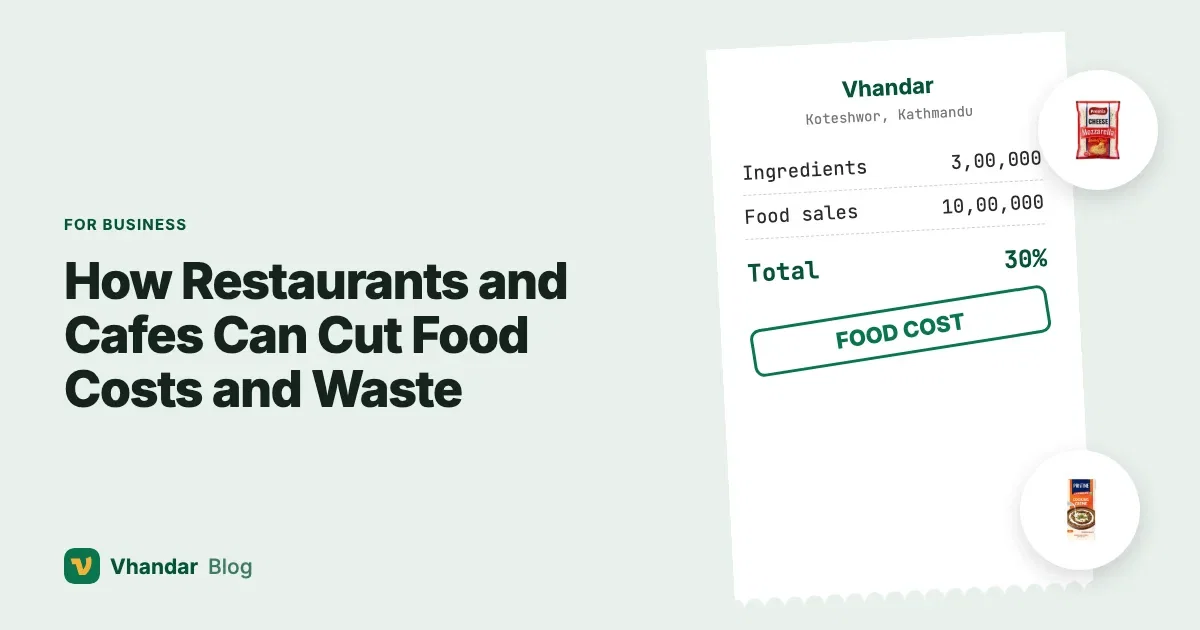
Food cost percentage is what you spend on ingredients divided by what you earn from food sales. For example, if you spent Rs. 3,00,000 on ingredients last month and sold Rs. 10,00,000 of food, your food cost is 30%.
Many restaurants aim for somewhere around 28 to 35%, depending on the cuisine and price point. A café selling coffee will be lower; a restaurant serving imported meat will be higher. The exact target matters less than tracking it every month and asking why it changed. Our margin calculator is a quick way to check individual dishes.
1. Cost every dish on the menu
Write down the exact quantity of each ingredient in a dish and its current price. Add them up. Many owners find that two or three popular items barely make money once oil and cheese prices have gone up. Reprice them, change the portion or change the recipe.
2. Standardise portions
Use the same ladle for rice, the same scoop for fries and a scale for meat. A cook who adds "a little extra" cheese to every pizza can add thousands of rupees to your monthly bill without anyone noticing.
3. First in, first out (FIFO)
Put new stock behind old stock, every time. Label containers with the date they were opened. It sounds obvious, but in a busy kitchen it is the first rule to slip, and it is responsible for a lot of expired sauce and stale bread.
4. Order little and often for perishables
Dairy, bread, vegetables and meat should be ordered for the next two or three days, not the week. Dry goods like rice, flour and oil can be bought in bulk if you have good storage. Scheduled deliveries make this much easier: you can set regular drops on fixed days instead of ordering in a panic.
5. Track what gets thrown away
Keep a simple waste sheet in the kitchen for two weeks: item, quantity, reason. Patterns appear quickly. Maybe you are over-prepping salads on weekdays, or a dish nobody orders needs ingredients nothing else uses.
6. Design the menu around shared ingredients
If chicken, paneer and a handful of vegetables appear across many dishes, you can buy them in larger quantities and use them up before they spoil. A menu with forty unique ingredients that each appear once is a waste problem waiting to happen.
7. Use leftovers creatively
Yesterday's rice becomes today's fried rice. Vegetable trimmings make stock. Bread that is a day old makes croutons or bread pudding. Staff meals are another good way to use surplus food.
8. Compare prices regularly
Ingredient prices change often in Nepal, especially oil, sugar and anything imported. Compare at least monthly. With Vhandar For Business you can see current business prices for every item before you order, along with your full order history, so it is easy to see when a cost has jumped.
A simple monthly routine
- Count stock on the last day of the month
- Calculate food cost percentage
- Review the waste sheet
- Re-cost your five best-selling dishes
- Adjust par levels and next month's orders
None of this needs software or a consultant. An hour a month with a notebook and your purchase bills will tell you more about your restaurant's profitability than almost anything else.