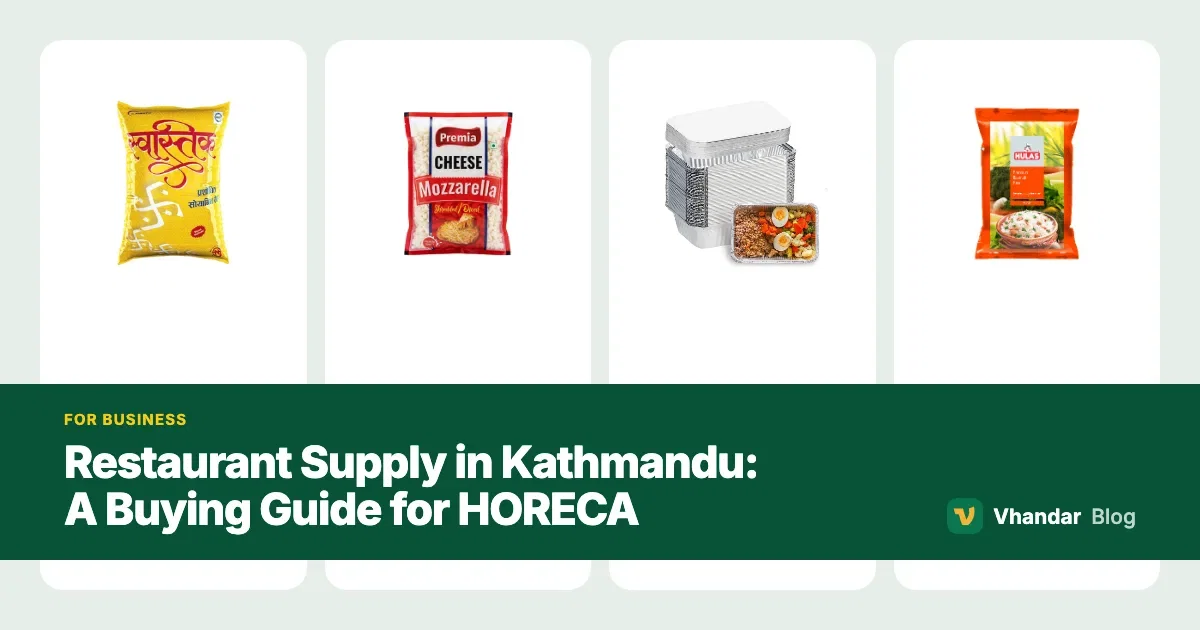
Restaurant Supply in Kathmandu: A Buying Guide for HORECA
On this page
Running a restaurant, café or hotel in Kathmandu? This buying guide covers how to choose suppliers, plan orders and keep food costs under control.
Most restaurant owners didn't open a restaurant to spend their mornings on the phone with five different suppliers. Yet that is what procurement in Kathmandu often looks like: one wholesaler for rice and oil, another for dairy, someone in Asan for spices, a beverage distributor, and a separate shop for takeaway boxes. Each with its own delivery day, its own credit terms and its own price list on WhatsApp.
HORECA (hotels, restaurants and cafés) is a big part of what we do at Vhandar, through Vhandar For Business (V4B). This guide covers what separates kitchens that run smoothly from those that are always one delivery away from a crisis.
What a HORECA kitchen typically buys
- Dry goods: rice, flour, dal, sugar, salt, spices and dry fruits
- Oil and ghee in tins and jars
- Dairy: milk, paneer, butter, cheese and cream
- Sauces and condiments: ketchup, soya sauce, vinegar, mayonnaise
- Beverages: soft drinks, mineral water, juice, tea and coffee, and liquor for licensed bars
- Cleaning supplies for the kitchen and washrooms
- Packaging: takeaway containers, aluminium containers and silver pouches, tissues and bags
How to choose a supplier
Reliability first, price second
A supplier that is 5% cheaper but misses one delivery a month is more expensive than it looks. One missing tin of oil on a Friday evening can cost you a full service. Ask any supplier how they handle shortages and what time they actually deliver.
Clear, current prices
Prices of oil, sugar and imported goods move often. You want to see today's price when you order, not find out on the bill.
One bill instead of ten
Consolidating purchases with fewer suppliers saves hours of reconciliation every month and makes it much easier to see where your money goes.
Proper VAT bills
If your business is VAT registered, you need a valid VAT bill for every purchase to claim input tax. Our VAT calculator helps check the numbers.
Planning orders so you never run out
- Set par levels. For each key item, decide the minimum you must always have, for example 3 tins of oil or 50 kg of rice.
- Count stock on a fixed day. Many kitchens do it on Monday morning before the week's order.
- Order the difference between what you have and the par level, plus a buffer before festivals and weekends.
- Schedule regular deliveries at a time that doesn't clash with service. Early morning or mid-afternoon usually works best.
How Vhandar For Business works
V4B is built for this. Businesses get business prices, choose from dedicated business delivery windows at checkout, and can use flexible payment options. You can see your order history and spending in one place, which makes it far easier to plan your budget.
To get started, sign up, then use Request a Business Account from your dashboard. Our team will get in touch to set things up. Over a hundred restaurants, cafés and hotels across the valley already buy this way; you can see some of them on our clients page.
A quick checklist for new restaurant owners
- List every ingredient on your menu and the weekly quantity
- Decide par levels for your top 20 items
- Consolidate suppliers where you can
- Keep every VAT bill
- Review food cost as a percentage of sales every month (our margin calculator helps)
Good procurement doesn't get the same attention as a good chef, but it decides whether the chef has what they need at 7 PM on a Saturday.